


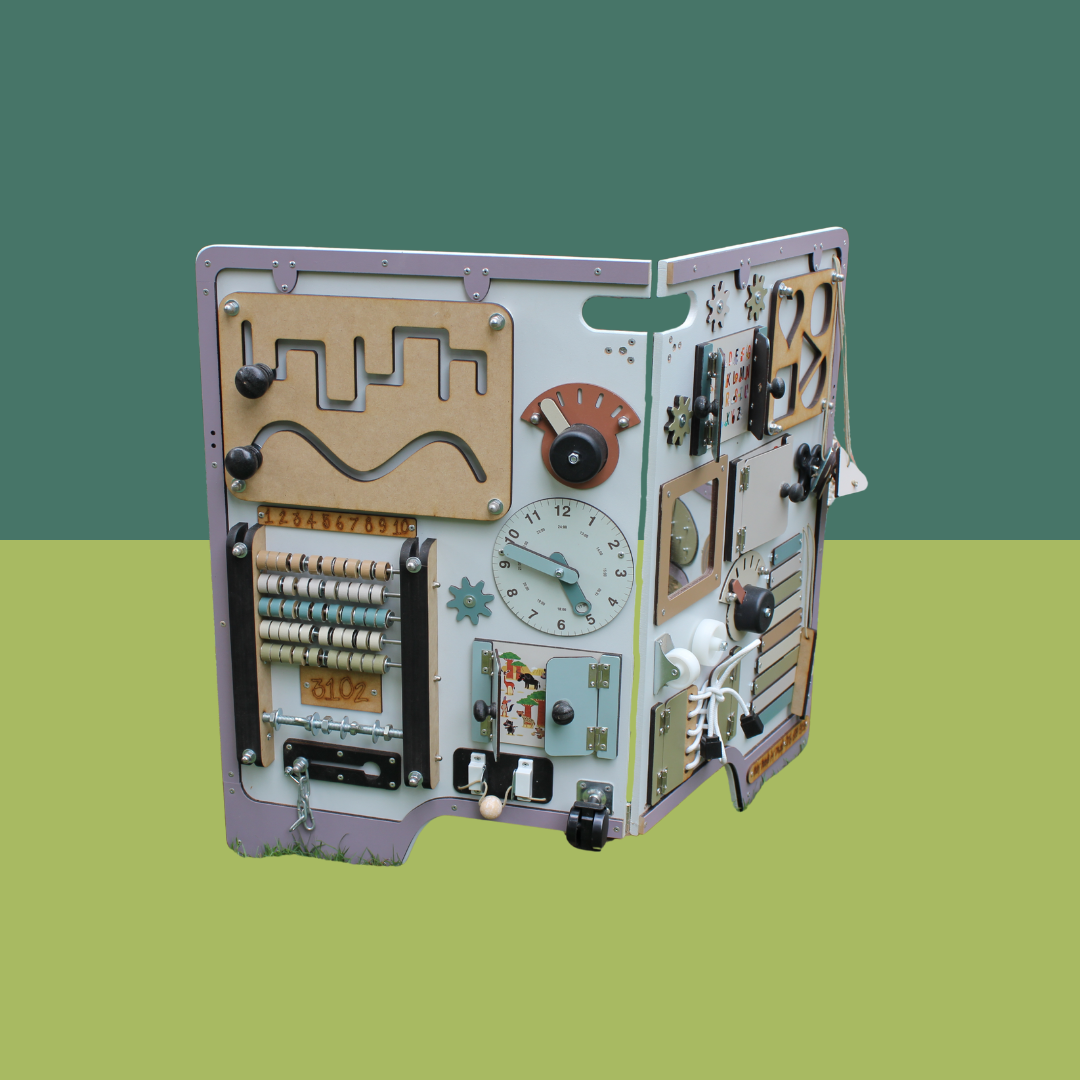
Walk into any toy shop or browse any parenting community online and you will quickly notice that busy board toys have become incredibly popular. And it is not just a trend — the enthusiasm is backed by solid developmental science. But with so many options available, how do you choose the right one for your child?
What Is a Busy Board and Why Does It Matter?
A busy board is an activity board covered in interactive elements — think latches, light switches, gears, zippers, velcro, wheels, and more. Children engage with these components through touch and manipulation, building critical skills while remaining completely absorbed in play.
The appeal is immediate: toddlers are instinctively drawn to the kinds of mechanisms they see adults using every day. A busy board gives them a safe, appropriate outlet for that curiosity.
The Sensory Board Dimension
Many of the best busy boards double as a sensory board, incorporating elements that engage multiple senses simultaneously. Varied textures, bright colours, mirrors, and sound-making components transform the board into a rich sensory environment that supports holistic development.
For children who are sensitive to sensory input, a structured sensory board can be particularly valuable — offering controlled stimulation that helps them learn to process and integrate sensory information without becoming overwhelmed.
Key Factors to Consider When Buying
- Age appropriateness: Younger toddlers (12–24 months) do best with larger, simpler components. Older children (2–4 years) can handle greater complexity.
- Material quality: Solid wood with non-toxic finishes is the gold standard. Avoid boards with sharp edges or components that could loosen over time.
- Variety of activities: A good busy board offers enough variety to keep children engaged across multiple play sessions without repetition fatigue.
- Size and portability: Consider where the child will use the board most. Smaller boards travel well; larger ones may be better suited to a dedicated play area.
- Handcrafted vs. mass-produced: Handmade boards tend to be sturdier, safer, and more unique — often worth the additional investment.
How to Introduce a Busy Board to Your Child
Most children take to a busy board immediately, but some may need a gentle introduction. Sit with them for the first session, demonstrating how each element works without taking over. Let them explore at their own pace, offering encouragement rather than instruction. Within a few sessions, most toddlers are confidently working through every component independently.
A Worthwhile Investment
A quality sensory board is one of those rare toys that grows with your child, delivering genuine developmental benefits at every stage of early childhood. It reduces screen time, builds independence, and provides hours of absorbing, purposeful play. For any parent serious about supporting their child’s development, it belongs at the top of the list.